My Political Standing
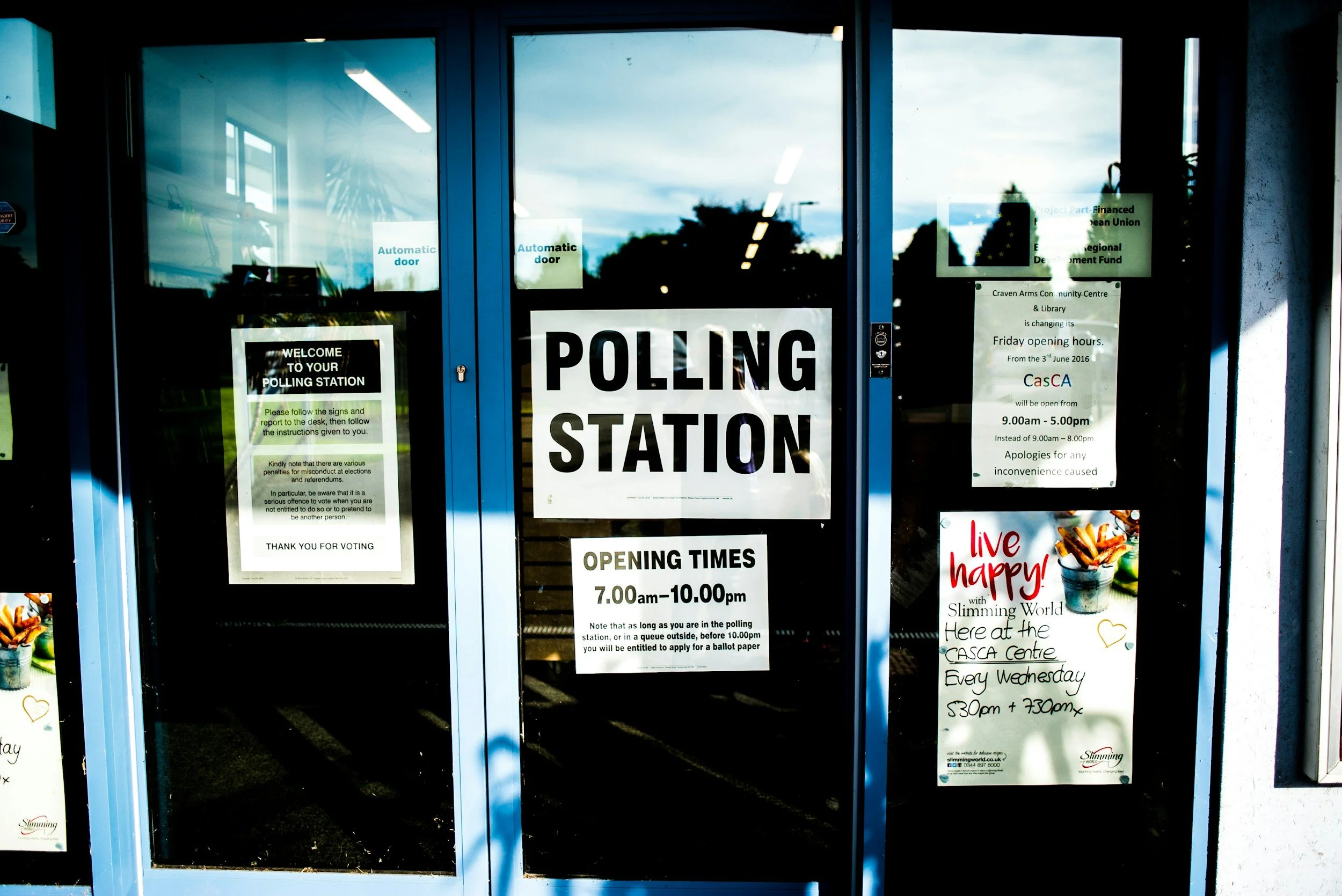
Manipulated The Truth
Truth is distorted across all political ideologies because information is the main currency of power, and reshaping it serves typical politicians’ myopic aims and egos. They avoid accountability or conceal mistakes, scandals, or policy failures to stay in power. They blame opponents for systemic problems to deflect public anger. They reduce nuanced economic or social issues to simple, emotionally charged slogans, trying to shape public perception and win support for controversial decisions, such as illegal wars or unfair taxation.
Most politicians often exaggerate threats to steer voters toward a particular leader or party for protection. They give voters information that matches their existing beliefs, making the arguments easier to accept. They also create out-groups, dividing the electorate into "us versus them" to strengthen party loyalty. They flood the media with conflicting narratives and capitalise on ratings-driven news and social media algorithms that reward outrage over nuance and truth. They favour immediate voter gains over long-term, complex realities. They treat politics as a zero-sum game in which absolute honesty is seen as a tactical weakness.
In recent years, political manipulation has moved beyond simple spin to include sophisticated generative AI, state-sponsored cyber warfare, and coordinated digital post-truth campaigns designed to weaponise public emotion. This creates a situation in which objective facts and evidence are less influential in shaping public opinion than appeals to emotion, personal beliefs, and identity. In such an environment, the boundary between truth and falsehood is often treated as secondary, allowing what feels true to carry more weight than what is empirically verifiable.
A sweeping investigation that forced platforms like Meta to pull down coordinated deepfake networks targeting British politics is just one example. In 2026, social media platforms deployed AI-generated video and audio, including fabrications of a Welsh party leader shouting support for rivals and deepfaked attacks against MPs, specifically designed to look like authentic grassroots campaign clips.
The adverse effects of political manipulation are systemic, corrosive and self-reinforcing. When truth is consistently distorted, it does not simply mislead individual voters; it undermines the foundational structures of democratic society. People stop believing in political actors or institutions, leading to total apathy, and voter turnout drops when people feel the political system is a rigged game driven by fabricated narratives. Real corruption, lawbreaking, and abuse of power go unpunished because politicians can easily dismiss genuine investigative journalism as fake news or AI-generated fabrications.
Governments pass laws in response to viral panics and manipulated public outrage rather than data, science, or expert consensus. Massive long-term challenges, such as economic instability, healthcare system failures, and climate change, go unaddressed because the political system is consumed by short-term digital distractions. Billions in public funds are diverted to address exaggerated or entirely fabricated threats in order to appease a manipulated electorate.
Remaining Politically Unaligned
My choice to stay politically unaligned and deeply cautious is a logical, protective response to an unreliable and manipulated political environment. When the political landscape feels reckless and irresponsible, withholding automatic loyalty, I believe, is a form of civic resilience rather than apathy. Remaining independent and vigilant changes how we engage with power, bringing distinct advantages and specific challenges.
Party loyalty can make voters blind to their own party's distortions, whereas independence lets us evaluate policies objectively without feeling the need to defend a team. Unaligned voters form the critical "swing" electorate. Parties must actively work to win our vote through substance rather than relying on blind loyalty. They force political parties to adapt, reform, and improve their offerings to appeal to a more critical public.
We need to watch what politicians do rather than what they say. Legislative voting records, signed budgets, and enacted policies are much harder to manipulate than campaign speeches. We can channel our political energy into single-issue campaigns, local community action, or specific policy movements without endorsing an entire party platform. Viewing parties as transactional tools rather than identity groups makes it easier to support a specific policy they propose, even if we distrust the party as a whole. Verifying claims across independent fact-checkers, local journalism, and cross-spectrum media prevents any single political machine from shaping our worldview.
Culturally Liberal Politically Unaligned
I described myself as culturally liberal (or orthodox liberal, which I explain later) and politically unaligned, meaning I support social freedoms and personal autonomy while identifying with neither a specific political party nor the traditional left-right political spectrum. This social stance emphasises individual liberty, personal autonomy, and the expansion and protection of civil rights. Culturally liberal individuals typically support social progress and movements for the rights of marginalised communities (e.g., racial, gender, and sexual minorities), often valuing secularism, individualism, and freedom of expression.
Political unalignment means that I have no fixed loyalty to any political party (e.g., Labour or the Conservatives). I may assess issues and candidates on a case-by-case basis, making voting decisions based on specific concerns rather than party loyalty. This perspective often entails a degree of scepticism towards ideological rigidity, favouring a pragmatic approach that avoids the polarisation and culture wars common in contemporary politics.
Advantages or Merits of Non-alignment
There may be value in being culturally liberal and politically unaligned (often called independent or moderate), especially for those who, like me, want to avoid partisan polarisation and extremism. This stance reflects an open-minded view of social change and a pragmatic, case-by-case approach to political, economic, and policy issues. Politically unaligned individuals avoid the pressure to accept all-or-nothing positions dictated by party lines (package-deal ideology). This leaves room for a mix of views. For example, one can support individual liberties (culturally liberal) while remaining sceptical of high taxes or government overreach (fiscally moderate/conservative).
Research shows that extreme partisanship (polarisation) is driving a rise in negative attitudes and bias towards opposing groups. Being unaligned fosters a more moderate position, allowing consideration of multiple perspectives rather than immediate alignment with a party (in-group). Culturally liberal, unaffiliated people tend to embrace change and new information rather than cling rigidly to traditionalist or partisan dogma. This encourages reliance on facts, data and nuance rather than ideological intuition (flexibility and pragmatism).
Sticking rigidly to a narrow set of values is linked to extremist thought. Unaligned individuals tend to make up the moderate majority, acting as a buffer against extreme political swings. Unaligned voters often serve as swing voters, choosing candidates based on specific, practical policies rather than party loyalty. This can support a more balanced approach to governance.
Critics of Culturally Liberal Politically Unaligned
Individuals like me, with this combination of views, may find themselves without a perfect political home, since traditional parties often bundle economic and cultural positions. For example, someone might support a left-wing cultural platform and a right-wing economic platform, forcing them to choose which concerns to prioritise when voting.
This stance can shift attention toward specific issues that cut across traditional party lines, such as public-sector reforms or the effects of artificial intelligence on different socio-economic groups, rather than broad ideological battles. Culturally liberal individuals may still feel pressure to conform to strict socially liberal or progressive demands, even if they do not align with a particular party. In a highly polarised environment, those in the middle can feel isolated, as both ends of the political spectrum demand total alignment.
Clearly, this stance draws criticism from both the political left and right and is often scrutinised. Critics argue that it can overlook important differences between political platforms (both-sidesology), sometimes treating fundamentally different approaches to social safety nets or human rights as equally valid or equally flawed. Others say that being genuinely culturally liberal, with its emphasis on protecting rights and ensuring equality, requires actions that usually align with progressive left-leaning policies, making the label "unaligned" seem contradictory.
Some, especially on the left, may argue that not aligning with a political party lets people enjoy the social freedoms championed by liberals (left) without doing the hard work of fighting for them through political engagement, which they see as avoiding responsibility. Moreover, people who are culturally liberal may hold more conservative economic views (for example, favouring lower taxes or less regulation), which can confuse or frustrate those who see social and economic liberalism as linked.
A Syncretic Fusion
Ultimately, this position is a form of syncretic (combining or merging) politics that defies the traditional left-right spectrum. It is generally a choice to prioritise individual autonomy and personal social values over partisan conformity, which can be viewed as either pragmatic or fence-sitting, depending on the observer’s perspective. Nonetheless, syncretic ideas blend or merge different beliefs, cultures, or ideas into a new, unified system, such as syncretic religions that combine elements from various faiths or syncretic music that fuses genres. It signifies an integrated fusion rather than selective borrowing, creating something distinct that draws on its original components. This is often seen in art, music, and philosophy, showing cultural adaptation and innovation. Why not in politics?
Heterodox Liberals
A heterodox liberal adheres to core liberal values such as individual liberty, free speech, and tolerance, but rejects the dominant orthodoxy, methods or cultural trends of the mainstream liberal or progressive left. This term is generally used in two major contexts: one academic and historical, and the other contemporary and cultural.
a) The Contemporary Movement (Free Speech and Open Inquiry)
In modern political and cultural discourse, heterodox liberals are centre-left or classically liberal thinkers who break from modern progressive or “woke” orthodoxies. They strongly support viewpoint diversity, free expression, and institutional neutrality. They challenge the mainstream left-wing emphasis on identity politics, cancel culture, and aggressive Diversity, Equity, and Inclusion (DEI) mandates, arguing that these trends stifle academic freedom and open debate. This strain of thought is closely linked to groups such as the Heterodox Academy (HxA). An organisation founded and headquartered in the United States, promoting diverse political perspectives in higher education.
b) The Theoretical Definition (Value Pluralism)
In political philosophy, the term “heterodox liberal” refers to thinkers who reject standard, universalist liberal frameworks, such as those of John Rawls. The quintessential heterodox liberal philosopher, Isaiah Berlin (1909–1997), was unorthodox in his integration of British empiricism, Russian literature, and Jewish communal identity. Unlike orthodox liberals, who believe that all good values (liberty, equality, justice) can coexist harmoniously, heterodox liberals argue that fundamental human values inherently clash (Berlin model). For example, total liberty for the powerful will inevitably conflict with total equality for the vulnerable, requiring difficult, imperfect political compromises rather than a single perfect system.
Sir Isaiah Berlin is best known for reviving interest in political theory during the Cold War and for his brilliant defence of liberalism, tolerance, and moral moderation against totalitarian dogmas. His most lasting legacy comes from his 1958 lecture, “Two Concepts of Liberty,” and his philosophy of value pluralism.
He famously divided freedom into two categories, providing a foundational starting point for modern political philosophy. a) Negative Liberty(or freedom from), which describes the absence of obstacles, barriers, or deliberate human interference. It marks a private sphere in which an individual can act without being stopped by the state or others. b) Positive Liberty(or freedom to), which describes the ability to act as one's own master, achieve self-realisation, and exercise self-governance.
Berlin was praised for showing how positive liberty could be turned into tyranny. He argued that when a state claims to know your true or rational self better than you do, it can justify forcing you to comply for your own good. This insight offered a powerful critique of twentieth-century communist and fascist regimes. Berlin also championed the idea that fundamental human values, such as liberty, equality, justice, and mercy, are real and precious but incompatible. He argued that you cannot maximise all of them at once. True liberty often reduces equality, and absolute justice limits mercy. Society cannot be perfectly engineered; it requires constant, tragic trade-offs.
Critics on the political left argue that Berlin's emphasis on negative liberty (non-interference) is too narrow. They point out that poverty, lack of education, and systemic racism can be just as restrictive as physical or legal barriers. Without state resources to support positive liberty, negative liberty is effectively useless to those who are disenfranchised.
Because Berlin argued that ultimate values can conflict and that there is no universal rule for ranking them, some critics accuse him of slipping into relativism. Berlin strongly denied this, arguing for a "common human horizon" of shared baseline decency, but critics still find the boundary between pluralism and relativism unclear.
Core Principles of Heterodox Liberalism
Whether in philosophical or cultural debate, heterodox liberals generally share a few defining traits. First is their belief that society can be improved (Meliorism) gradually through reason, debate, and persuasion rather than through radical revolution or the dismantling of institutions. Then there is their rejection of the idea that only one moral or political blueprint can solve all human problems (Anti-Monism). Finally, they protect dissent. They remain committed to preserving public and academic spaces where unorthodox, unpopular ideas can be safely challenged and discussed without professional or social banishment. This allows for viewpoint diversity, meaning a broad range of political, ideological, moral, and philosophical perspectives within a particular group or institution. It means ensuring that people with fundamentally different worldviews are included and allowed to speak, rather than letting a single “orthodox” way of thinking dominate.
Heterodox Liberalism emphasises diversity of thought, opinions, and values, not just diversity of race, gender, or ethnicity. It is most often discussed in higher education, journalism, and research, where critics argue that a lack of conservative, moderate, or heterodox voices creates an ideological echo chamber.
Advocates of heterodox liberalism argue that without viewpoint diversity, institutions become prone to confirmation bias, produce flawed research, and fail to understand how the broader public actually thinks.
Critiques of Viewpoint Diversity
The push for viewpoint diversity has drawn significant pushback from scholars, legal experts, and civil rights advocates. At the same time, the concept has moved from academic debate into the legal sphere, reshaping academic freedom laws in both the United States and the United Kingdom. Critics raise several fundamental objections, arguing that it can undermine the core mission of higher education.
Equal Time for Falsehoods (The Flat Earth Problem): Critics argue that academic research rests on rigorous peer review, expertise, and empirical evidence, not democratic consensus. Forcing viewpoint diversity into a science department could mean giving equal weight to climate change denialism or anti-vaccine theories under the guise of intellectual balance. It risks replacing objective, evidence-based academic excellence with a superficial political checklist.
The Danger of Affirmative Action for Conservatives: Many critics point out a paradox: right-wing politicians who oppose affirmative action on the basis of race or gender often demand it for political ideology. Implementing viewpoint diversity could lead hiring committees to pass over highly qualified candidates in favour of less-qualified applicants to meet a political quota.
Protection against Hate Speech and Harassment: Left-leaning critics argue that viewpoint diversity is often used to smuggle harmful, bigoted, or discriminatory rhetoric onto campuses. Under this view, debates over whether certain groups deserve basic human rights are recast as mere intellectual disagreements, thereby undermining student safety and well-being. Some students may feel physically or emotionally unsafe when their fundamental rights are treated as open to negotiation. Others argue that narrowing the scope of debate sets a dangerous precedent, where terms like human rights can be stretched to shield certain ideologies from criticism.
The trap of Moral Relativism: Some philosophers argue that when universities treat all political perspectives as equally valid viewpoints that must be protected, they fall into radical subjectivism. If everyone has their own truth, the foundational academic mission, the collective pursuit of a single, objective truth, is destroyed.
How These Connect to Academic Freedom Laws
Concern over viewpoint diversity has prompted a wave of historic legislative interventions aimed at forcing universities to protect dissenting voices.
Enforcing Campus Free Speech Laws: In the United Kingdom, the landmark Higher Education (Freedom of Speech) Act 2023 introduced aggressive legal mandates. Universities are required to actively promote academic freedom. This allows academics and external speakers to file complaints directly with the Office for Students (OfS), exposing institutions to fines of up to £500,000 if they silence lawful, heterodox viewpoints. In the United States, numerous conservative-led states (such as Florida and Texas) have passed laws banning mandatory Diversity, Equity, and Inclusion (DEI) statements in faculty hiring. Lawmakers argue that these statements act as ideological loyalty oaths that kill viewpoint diversity.
Redefining Academic Freedom (Individual vs Institution): Historically, academic freedom protected a university's right to govern itself, set its own curriculum, and decide who was qualified to teach. New legislation reverses that definition. It shifts academic freedom from an institutional right to an individual one, meaning the law protects individual professors and students who want to challenge the institution’s dominant political orthodoxy.
Legally Mandated Civic Centres: To artificially introduce viewpoint diversity, state governments in the US have used legislation to fund independent, state-run civic centres within public universities, such as the Chase Centre at Ohio State. These centres bypass traditional, left-leaning department hiring committees to specifically hire scholars who focus on classical liberalism, free enterprise, and traditional civic values.
The Moderate Approach
The tension between political extremes often crowds out the pragmatic, moderate approach to fostering intellectual diversity on campus. When legislation turns into a partisan battleground, the nuanced goal of creating a balanced, respectful learning environment is often lost. Pragmatic moderates generally favour shifts in institutional culture over heavy-handed legal mandates.
The Left-Wing Extremist tends to weaponise safety and inclusivity to enforce intellectual conformity, labelling legitimate conservative or heterodox ideas as harmful or dangerous speech. The Right-Wing Extremist tends to use state power to micromanage universities, defund specific academic departments, and dictate curriculum, which can infringe upon traditional academic freedom. The Moderates focus on fostering a culture of civil disagreement. Moderates argue that students should be exposed to challenging ideas to develop critical thinking skills, but this must be done through robust academic standards rather than political quotas or state mandates.
Several non-partisan organisations work outside the legislative arena to promote viewpoint diversity through cultural change rather than legal battles. Heterodox Academy (HxA), for example, is a non-partisan alliance of thousands of professors and students who advocate for open inquiry and viewpoint diversity in academia and reject top-down government intervention. Another example is the Constructive Dialogue Institute (New York), an organisation that creates evidence-based educational tools to help universities and workplaces navigate difficult conversations across political divides. Braver Angels is a grassroots organisation dedicated to bringing liberals and conservatives together to find common ground and reduce political polarisation.
Multifaceted Political Positions
The Two-Dimensional Political Spectrum
Most people, including some scientists, use a two-dimensional political compass that separates economic and social views to map ideologies. How someone views money (economics) is often entirely separate from how they view personal freedom (social issues or power). Together, these distinctions create two axes and four quadrants that define the Western ideological landscape.
The Economic Axis (Left vs Right) indicates how the economy should be managed.
The Social Axis (Controlling vs Libertarian) measures the balance between individual freedom and government control over society.
The four distinct political quadrants can be described as follows.
Controlling Left (State Socialism / Collectivism): The government tightly controls the economy through high taxation and public ownership of services. In such societies, the collective good and social order are prioritised over individual liberties. Examples include traditional communist ideologies, strictly state-planned economies, and heavily regulated socialist states.
Democratic Left / Libertarian Left (Social Democracy / Progressivism): Here, the economy is a heavily regulated capitalist system, with strong social safety nets and wealth redistribution. Society permits high personal freedom, protects minority rights, and allows minimal state interference in private life. Examples include the progressive wings of the US Democratic Party, European Green parties, and the Nordic model of social democracy.
Authoritarian Right (Conservatism / Nationalism): In this model, the economy is driven by market capitalism, free enterprise, and corporate freedom. Social norms strongly emphasise national identity, traditional family values, law and order, and state authority. Examples include the US Republican Party (especially its populist right wing), the UK Conservative Party, and European national-conservative parties.
Libertarian Right (Classical Liberalism / Libertarianism): For right-wing libertarians, the economy should be based on completely free markets, minimal corporate regulation, and low or no taxation. In this view, the social order must maximise personal liberty, minimise state intervention, and strictly protect private property. Examples include the US Libertarian Party, classical liberals, and laissez-faire free-market advocates.
While these quadrants apply across the West, the centre point shifts by region. In North America (USA and Canada), the spectrum is shifted further to the economic right. What Americans call the Left (e.g., mainstream Democrats) is often viewed as the Centre or even slightly Centre-Right by European standards, as the US lacks a mainstream socialist tradition.
In the UK, the political spectrum is centred. Parties such as Labour sit on the Centre-Left (favouring public healthcare and stronger welfare), while the Conservatives lean Centre-Right, balancing free markets with traditional British institutions.
In Continental Europe, the spectrum is much broader. It features influential, institutionalised Marxist and Socialist parties on the Left, powerful Christian Democratic parties on the Centre-Right, and distinct Libertarian-Centrist parties.
The Political Typology Model
To understand Western politics, we must look beyond a single left-right axis. To map politics with realistic nuance, political scientists use typology models rather than rigid axes. Typology groupings categorise people by their combined psychological values, cultural beliefs, and financial realities, rather than forcing them into a single quadrant. This approach recognises that a person can hold free-market views, fiercely support environmental regulations, and remain deeply socially conservative at the same time. To see where these types come from, analysts look at several independent axes that frequently conflict within a single individual:
The Globalisation Axis (globalists vs nationalists): Globalists believe in open borders, free trade and international bodies, whereas nationalists believe in protectionism, sovereign borders and local industry.
The Institutional Axis (Institutionalists vs Populists): Institutionalists trust science, the mainstream media and established courts. Populists distrust elites, are anti-establishment, and favour outsider-led solutions.
The Environmental Axis (Ecocentrics vs Anthropocentrics): Ecocentrics prioritise climate action over immediate economic growth, whereas Anthropocentrics prioritise industrial progress and resource use.
The Cultural/Tradition Axis (Progressives vs Traditionalists): Progressives believe in fluid societal norms and focus on systemic injustices in history. Traditionalists prioritise preserving historical, religious, or national heritage.
The Pew Research Political Typology
The most famous tool for capturing this complexity is the Pew Research Centre Typology. Rather than a simple left-or-right quiz, it groups the population into distinct “political tribes” based on shared values. A breakdown of these tribes shows why individuals rarely fit a single quadrant perfectly:
The Non-Standard Left includes the Outsider Left, who hold deeply progressive social views and hate the corporate right, but also profoundly distrust the mainstream political establishment and institutional Democrats. It also includes the Democratic Left, who are highly educated and progressive, yet firmly institutional. They believe the system can be fixed from within through policy and government agencies.
The Split Centre comprises the Ambivalent/hesitant Right, who want low taxes and free-market capitalism, but they diverge from the traditional right because they hold liberal views on immigration and social issues such as same-sex marriage. It also includes Stressed Sideliners, who are financially insecure citizens and hold a mix of conservative social views and progressive economic views (such as supporting wealth redistribution and government financial aid), but remain largely disconnected from politics.
The Fractured Right includes Faith and Flag Conservatives, who are deeply religious, intensely nationalistic, and socially conservative. They want a strong state to protect traditional values, a stance that diverges sharply from that of small-government libertarians. The Populist Right is highly critical of corporate elites, immigration, and global free-trade deals. While they lean culturally to the right, they often support protectionist economic interventions that traditional free-market conservatives oppose.
Why People Don’t Fit a Single Label
The differences in the magnitude and kind of people’s political stances highlight a core truth about human psychology: our political views are highly contextual. Someone might identify culturally as a conservative because of their rural community, but vote for a left-wing policy such as socialised healthcare because they personally rely on it (Identity vs Policy).
On the other hand, a person may hold ten different political beliefs, but they will vote based on the one issue they care about most at that moment, whether that is inflation, climate change, or local crime (The Priority Filter).
Personal circumstances can also change beliefs (Life Stages). A young graduate may lean towards libertarian-left on social freedoms but shift towards economic conservatism once they start paying high business taxes or buying property.
The Pew Research Centre Political Typology study relies on data-driven statistical sorting rather than arbitrary labels. First launched in 1987, the study has been updated multiple times, with its ninth edition recently released. Pew Research skips the traditional “Are you a Democrat or a Republican?” question to avoid partisan bias. Instead, they focus on underlying core values. Participants answer 30 specific questions covering non-partisan personal beliefs. These target views on corporate profits, foreign policy, religious influence, racial equality, the government’s role, and environmental trade-offs. Their model consistently identifies nine distinct political groups. These include core ideological anchors on both sides, several mixed or conflicted centre groups, and a completely disengaged “Tuned-Out Middle”.
Left-wing Progressives: Highly progressive and ideological; strongly favour government intervention, social justice, and progressive cultural views.
Loyal Liberals: Steadfastly support the Democratic Party and hold liberal views on most economic and social issues, though less ideological than progressives.
Left-Out Left: Lean towards Democrats but feel more disconnected from mainstream party politics, holding mixed views on certain national issues.
Order and Opportunity Left: The largest Democratic-leaning group emphasises economic opportunity, social order, and practical governance.
Tuned-Out Middle: Politically disengaged, paying little attention to politics and less aligned with either major party.
Pragmatic and Polite Right: Hold conservative leanings but adopt a more moderate, polite tone and a practical outlook on government and compromise.
Unconventional Right: Lean towards the GOP with a distinctive blend of non-traditional conservative and moderate viewpoints.
Faith First Conservatives: Heavily driven by traditional religious values and deep social conservatism within the Republican coalition.
No Apologies Right: Highly partisan, staunchly conservative, and unyielding in their support for right-wing and populist policies.
This clustering approach shows that people often hold combinations of views that don’t align with any single political party’s platform. The full, updated report and its accompanying interactive features are available on the Pew Research Centre platform: Beyond Red vs Blue: The Political Typology.
The Interactive Quiz: Find out where your views fall by taking the short, official Pew Research Political Typology Quiz. It compares your answers directly with its database of 10,000 surveyed adults. For a historical overview and older editions of the study, browse the main Pew Research Political Typology Hub.